The Medical Device Manufacturing Centre (MDMC), based in Scotland, acts as a strategic partner for SMEs, university spinouts, and researchers seeking to bridge the gap between early-stage innovation and commercial success.
Since its launch in 2020, MDMC has worked with over 170 companies and entrepreneurs, guiding them through prototyping, small-batch production, and the full regulatory landscape (UKCA and CE marking) that governs the path to market for medical devices.
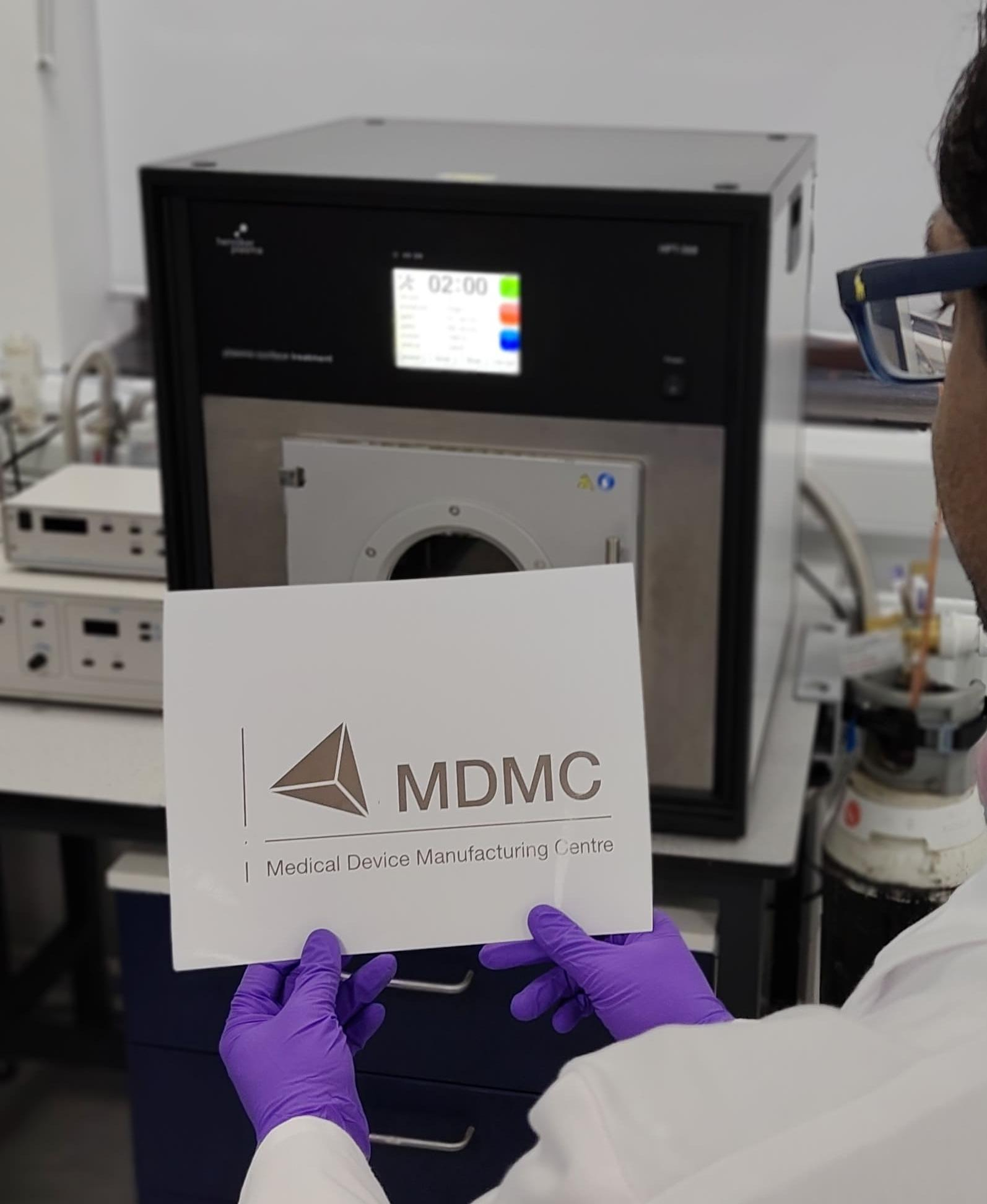
MDMC's Challenges
Medical device development depends on materials that are engineered precisely for their inertness, biocompatibility, and durability. Those same properties— chemical stability, low surface energy, and ultra-smooth surface topography, make them notoriously difficult to process.
MDMC encountered this challenge across two critical workflows.
Inkjet Process Reliability on Medical-Grade Substrates:
Many of the medical-grade polymers and substrates MDMC work with have inherently low surface energy. When inks are applied to these materials, whether for device identification markings, diagnostic patterning, or the deposition of functional conductive paths, the ink beads up rather than wetting the surface resulting in poor adhesion - markings that smear, delaminate, or fail to meet the resolution requirements of diagnostic and wearable device applications.
Parylene Coating Adhesion to Challenging Surfaces:
Parylene is a highly effective biocompatible moisture barrier, but difficult to bond to chemically inert or ultra-smooth surfaces. Without adequate surface preparation, Parylene coatings can peel or fail at the interface, compromising long-term barrier integrity on which device safety depends. For MDMC, finding a consistent, scalable solution to this adhesion challenge was essential to expanding the range of projects the centre could support.
Working with MDMC to Solve the Problem
When MDMC approached Henniker Plasma, we worked through the specific surface energy and adhesion challenges together. The starting point was understanding the substrates in question, medical-grade polymers and smooth metallic surfaces that, by design, offer very little for inks or coatings to grip. Plasma surface treatment addresses these problems at their root cause— the chemistry of the substrate surface itself.
For the inkjet challenge, the objective was clear: increase surface energy to the point where inks wet the substrate consistently and bond durably. For parylene adhesion, the requirement was different but related— create a micro-roughened topography that gives the coating mechanical anchor points, alongside a clean, contaminant-free interface. Working with MDMC's team, Henniker identified plasma treatment as the common solution to both, integrable into existing workflows without significant process disruption.
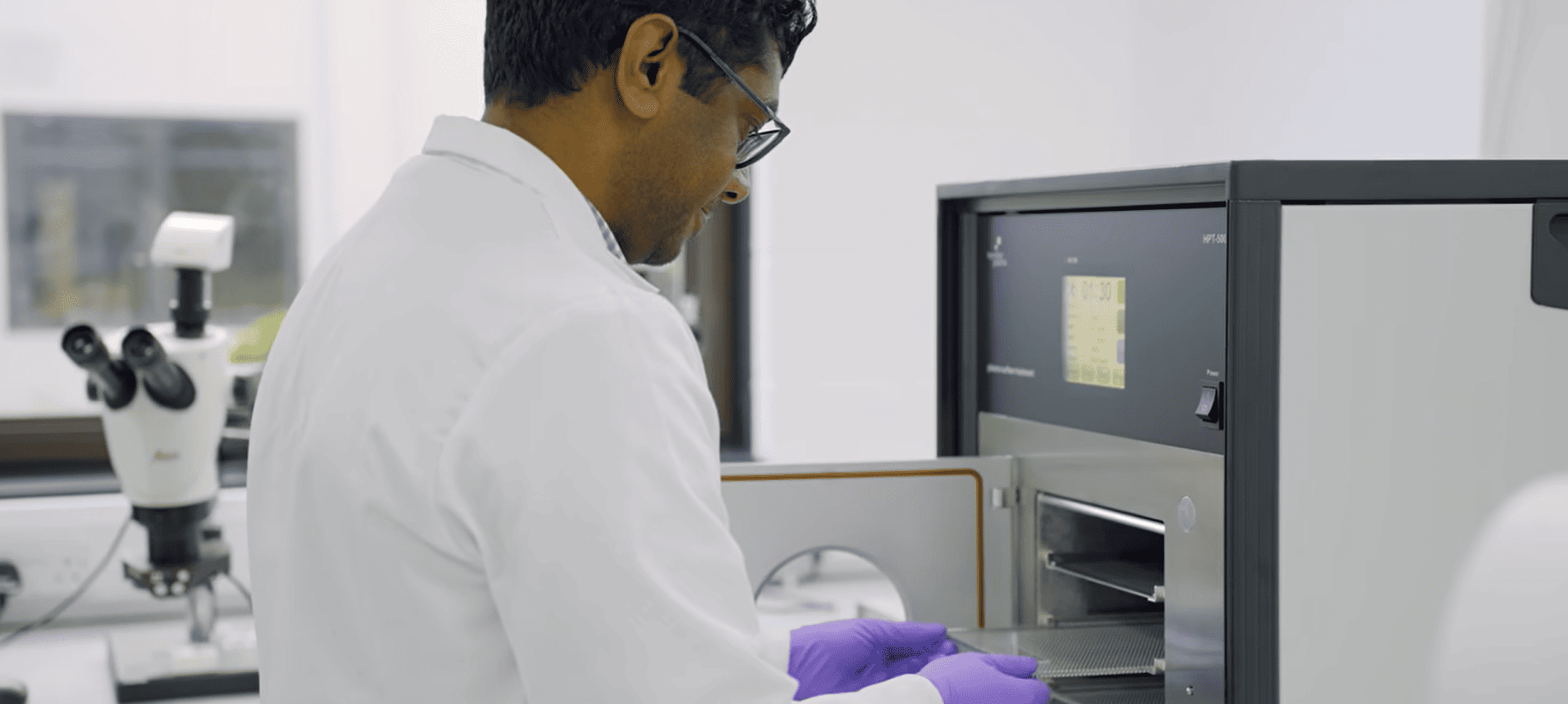
The system was straightforward to install and commission. MDMC's engineering team was able to set it up independently and begin testing against their own materials and process parameters almost immediately. Henniker's applications team provided ongoing support as MDMC developed their standard operating procedures across different projects and substrate types, ensuring that the treatment was consistent and repeatable regardless of who was operating it.
What the customer said:
"From the outset, we found the equipment to be incredibly user-friendly; the machine was easy to set up ourselves, allowing us to integrate plasma treatment into our labs and processes with minimal downtime. This plug-and-play aspect was a significant advantage for our facility, as it allowed our engineering team to begin testing and validating processes almost immediately. In terms of ongoing support, Henniker has proven to be a dependable partner. Whenever we have encountered technical issues or required assistance, their team has been extremely prompt with their response. They have provided efficient servicing for the machine, ensuring that our manufacturing and prototyping capabilities remain operational. This level of professional service and technical responsiveness has been vital in maintaining the high standards of support we provide to companies and researchers we work with."
Dr Joshua Paulinus
Technology Specialist
Results
Inkjet Adhesion on Medical-Grade Substrates
Plasma treatment introduced polar functional groups, specifically hydroxyl (-OH) and carboxyl (-COOH) groups, to the top molecular layers of substrates that had previously resisted effective ink adhesion. The increase in surface energy produced reliable ink wetting and bonding across MDMC's inkjet processes, inks adhered consistently to medical-grade surfaces, delivering durable, high-resolution markings and functional conductive paths that met the precision requirements of diagnostic and wearable device development.
Parylene Coating Adhesion
For parylene applications, plasma treatment addressed the adhesion challenge through two complementary mechanisms. First, it removed organic contaminants at a molecular level: residues that conventional cleaning methods routinely miss and that undermine coating adhesion at the interface.
Second, it created a micro-roughened surface topography, providing the mechanical anchor points parylene requires to grip the substrate securely. The result was reliable long-term barrier integrity across the range of devices MDMC supports through to clinical prototype stage.
Business Impact
The integration of Henniker Plasma's system has had a direct and measurable impact on the range and quality of support MDMC can offer.
MDMC have overcome the technical barriers of material adhesion and surface contamination, the centre has expanded its capability to serve a broader spectrum of Scottish companies and researchers, including those working with chemically inert or low-surface-energy materials that were previously difficult to process.
Henniker’s HPT-500 plasma treatment system has replaced MDMC’s multi-step chemical primer and solvent-based preparation workflows with fast, repeatable, and dry process. This reduces manual steps, improves consistency across different users and projects within the centre, and supports MDMC's broader sustainability objectives by reducing reliance on harsh chemical cleaning agents.