Plasma cleaning of contact lenses and other optics produces hyper-clean surfaces by removing the thin layer of organic contamination that is present on almost all surfaces.
Organic contamination which may be present on all lens surfaces is typically only a few nanometres thick but it is sufficient to alter optical properties. Plasma cleaning of optics & lenses is performed with oxygen gas, or sometimes even lab air is sufficient, in a few 10’s of seconds and with no chemical waste. Unlike solvent cleaners, plasma cleaning leaves absolutely no residue.
Plasma cleaning of gas permeable contact lenses is now widely used to improve surface wettability characteristics which result in increased comfort for longer and also inhibits deposits. The effects of the plasma can last for many weeks.

Plasma cleaning contact lenses
- Plasma cleaning improves wettability of gas permeable contact lenses
- Increases patient comfort
- Plasma cleaning removes trace organic contamination from other optics
- Surfaces are rendered more hydrophilic
Related Industries




Relevant Resources
Knowledge Articles


Plasma Technology


Case Studies



Videos
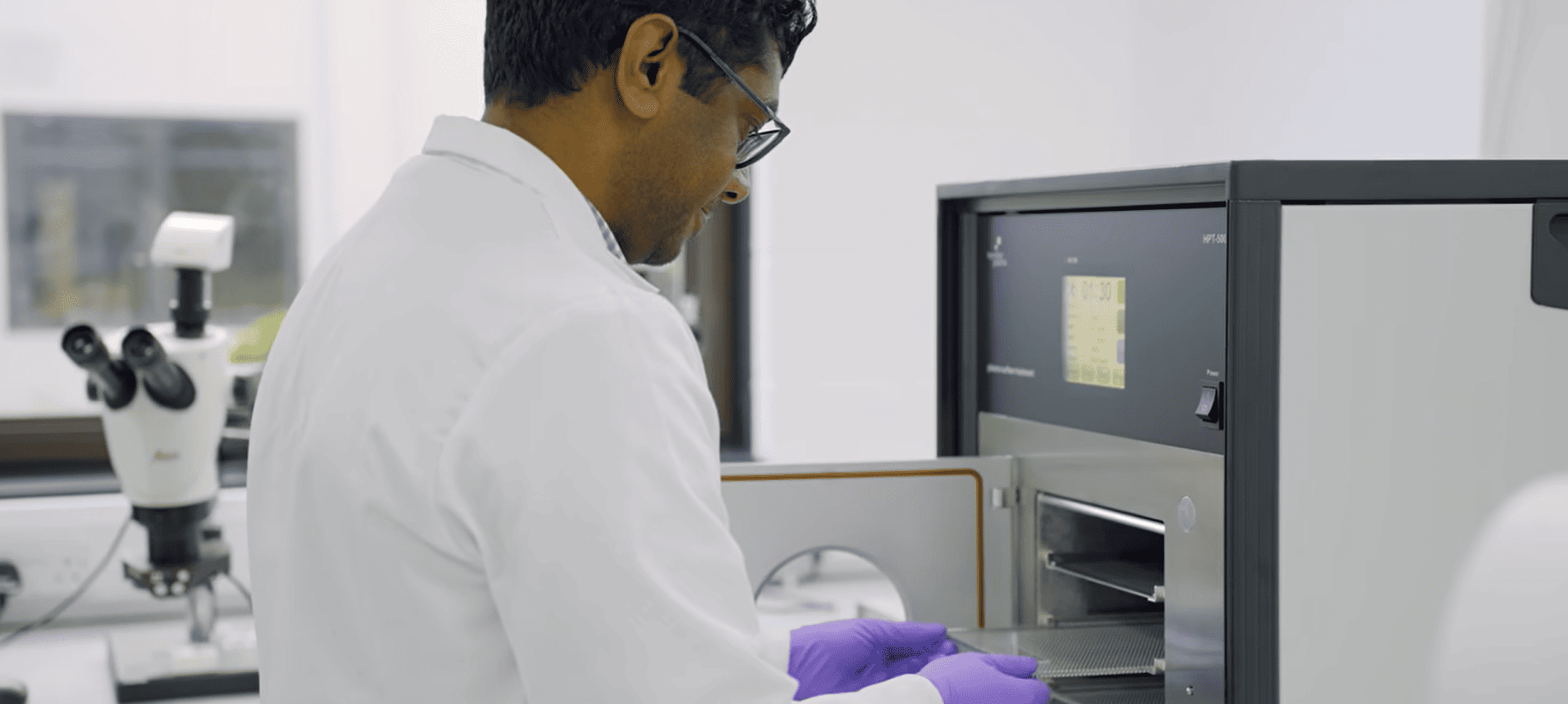
Plasma Cleaning Explained
Plasma Cleaning Explained.
The third in our series of videos about plasma treatment technology, this video explains how plasma cleaning works and which systems can provide the best quality treatments.
Atmospheric Plasma Treatment to Improve Adhesion
Atmospheric plasma treatment is used to clean the surface of metals, in this case aluminium, where the efficient removal of hydrocarbon contamination leads to improved wettability and adhesion. Atmospheric plasma treatment is suitable for metals, glass, ceramics, composites and a wide range of engineering polymers.