Plasma surface treatment improves ink adhesion on difficult surfaces such as polypropylene (PP), polyethylene (PE), polycarbonate (PC) and polyamide (PA).
These surfaces can be made wettable in seconds with both batch and in-line plasma treatments so that even solvent-free inks exhibit good print adhesion. Plasma treatment is an inherently cold process and thermally sensitive materials can be treated equally as well. Batch plasma treatment is especially is ideal for the surface activation of complex 3D shapes and on metals, glass and ceramics.

Typical Industry Applications:
- Better ink adhesion
- In-line atmospheric plasma treatment
- Single or multiple plasma nozzles
- Batch plasma treatment for surface activation of 3D shapes
- Improves printing on metals, ceramics and glass
Related Products


Relevant Resources
Case Studies

Press Releases




Video
Henniker Plasma - Atmospheric Plasma Robot
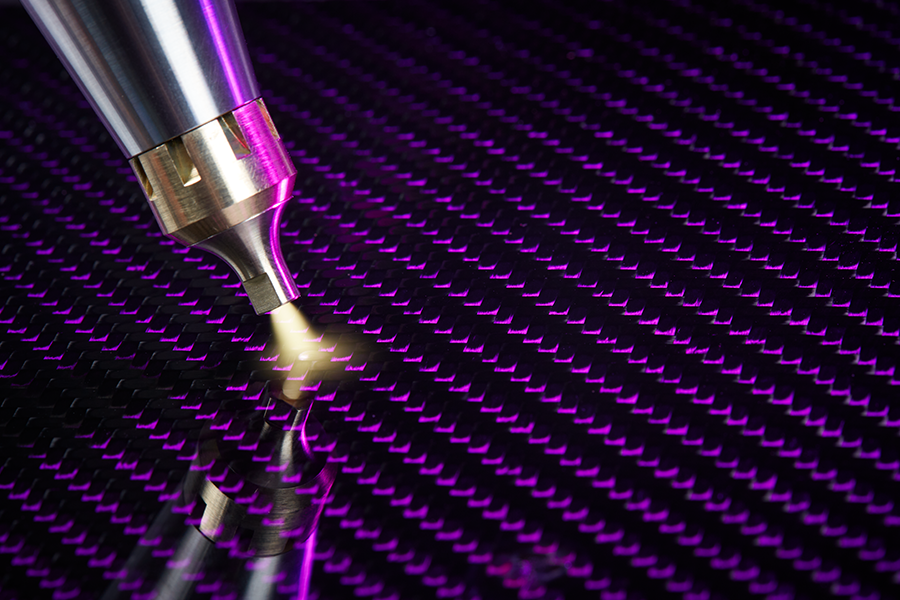
Atmospheric plasma treatment is ideal for in-line processing & very effective at activating and cleaning the surface of a material, increasing the adhesion characteristics and making it easier to bond, paint and glue. Henniker's atmospheric plasma surface treatment systems can be integrated with a 3-axis robot to follow precise treatment patterns as part of an automated process..
Atmospheric Plasma Treatment to Improve Adhesion
Atmospheric plasma treatment is used to clean the surface of metals, in this case aluminium, where the efficient removal of hydrocarbon contamination leads to improved wettability and adhesion. Atmospheric plasma treatment is suitable for metals, glass, ceramics, composites and a wide range of engineering polymers.
Adhesion Grid Cut Test
The adhesion grid cut test is used to demonstrate the improvement in paint adhesion following plasma treatment.