Plasma treatment of PCBs prior to potting increases the adhesion of the potting compound to the PCB and surrounding housing which in turn increases reliability and reduces failure rates due to moisture and corrosive agents.
Plasma treatment to improve potting compound adhesion may be applied as a fully conformal batch or in-line process depending on the manufacturing set-up. The plasma is potential free and does not have any adverse effects on sensitive electronic components. We also offer a wide range of surface test methods for comparison of pre- and post-plasma treated parts.

Plasma Treatment for Potting Compound Adhesion
- Localised, in-line atmospheric plasma activation
- Conformal activation batch-processed parts
- Potential-free process for sensitive components
- No problems with temperature-sensitive materials
Related Industries


Relevant Resources
Knowledge Articles


Plasma Technology


Case Studies

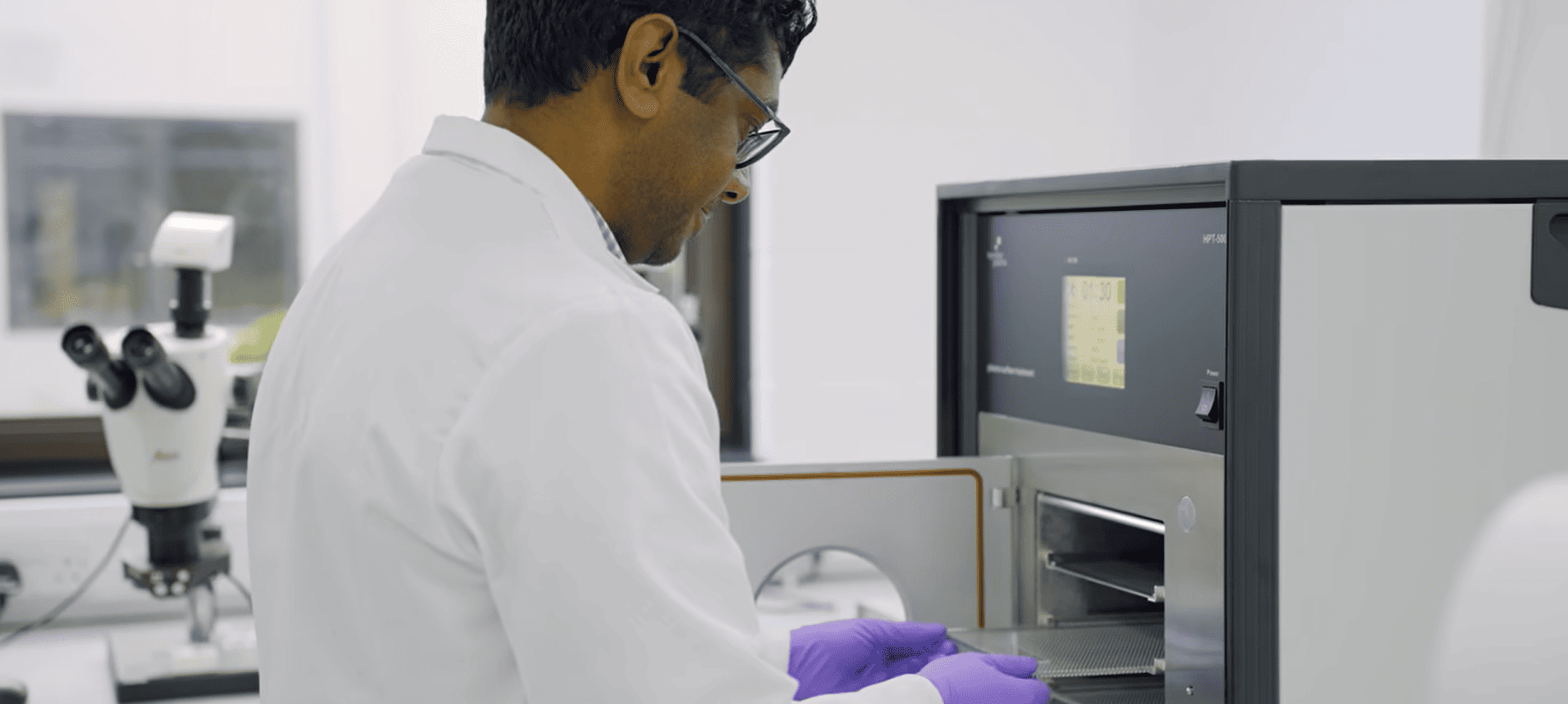
Videos
Plasma Surface Activation Explained
Plasma Surface Activation Explained.
The fourth in our series of videos about plasma treatment technology, this video explains how plasma surface activation works and the results you can achieve.
Atmospheric Plasma Treatment to Improve Adhesion
Atmospheric plasma treatment is used to clean the surface of metals, in this case aluminium, where the efficient removal of hydrocarbon contamination leads to improved wettability and adhesion. Atmospheric plasma treatment is suitable for metals, glass, ceramics, composites and a wide range of engineering polymers.